
Disposable vs Washable Pet Pads: What Buyers Should Know
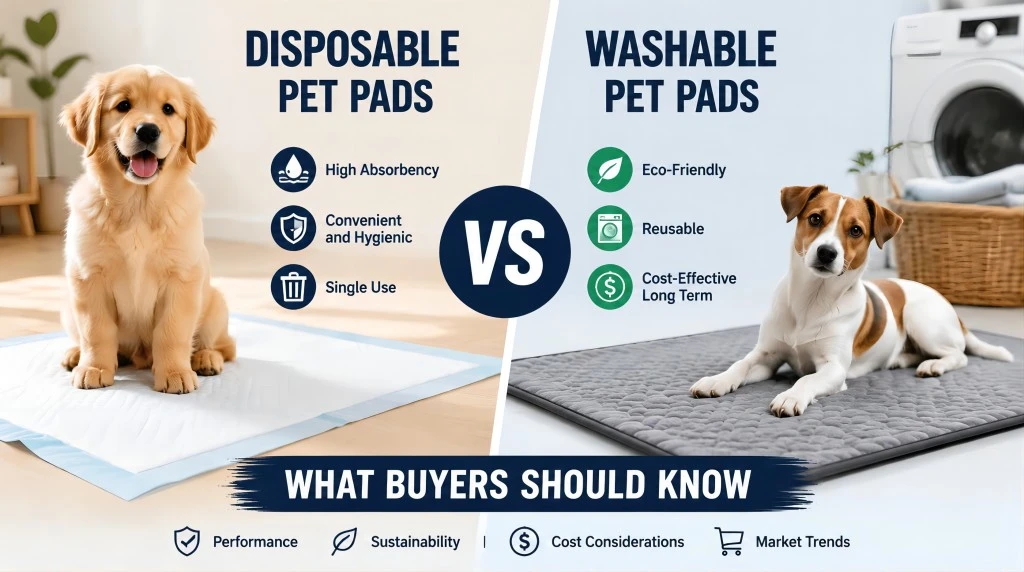
Over the past few years, pet pads have become more than just a puppy training accessory. In many markets, they are now considered a routine hygiene product for indoor pets, aging dogs, and multi-pet households. As global pet ownership continues to rise, distributors and retailers are also seeing broader demand across supermarkets, pet chains, e-commerce platforms, and private label brands.
At the same time, buyers are increasingly comparing disposable and washable pet pads as sustainability discussions become more common in the pet care industry. While both product categories serve similar purposes, their market positioning, manufacturing structures, and consumer preferences differ significantly.
For importers and private label brands, understanding these differences is becoming increasingly important when selecting product lines for different retail channels.
Why the Comparison Matters More Today
In the past, washable pet pads were often viewed as a niche product mainly used by environmentally conscious consumers. However, rising concerns over household waste and repeated purchasing costs have gradually expanded interest in reusable alternatives.
Still, disposable pet pads continue to dominate major retail markets, particularly in North America and parts of Europe. Convenience, hygiene, and fast cleanup remain the primary reasons many consumers prefer single-use solutions.
Some retailers now carry both product types simultaneously to target different customer groups. Disposable pads are typically marketed toward convenience-focused pet owners, while washable pads appeal more to long-term cost-conscious buyers.
This shift has created new sourcing opportunities for manufacturers and wholesalers alike.
Disposable Pet Pads Still Lead in Convenience
For many pet owners, convenience remains the deciding factor.
Disposable pet pads are designed for quick replacement and minimal maintenance. This becomes especially important in apartments, elderly pet care, travel situations, or households with multiple animals.
From a retail perspective, disposable products also generate repeat purchases more consistently than reusable alternatives. This is one reason why supermarkets, Amazon sellers, and subscription-based pet brands continue investing heavily in disposable pad categories.
In recent years, manufacturers have also improved product performance considerably. Modern disposable pet pads often feature:
- Faster liquid absorption
- Odor-control technology
- Leak-proof PE backing
- Quick-dry top sheets
- Adhesive tape options
- Charcoal or bamboo variations
Some importers still focus mainly on pad thickness when evaluating quality. In practice, however, absorbency performance often depends more on SAP distribution, embossing structure, and edge sealing quality than on thickness alone.
Washable Pet Pads Appeal to Sustainability-Focused Consumers
Washable pet pads are gaining attention for a different reason: reusability.
Consumers who want to reduce waste or avoid frequent repurchasing often see reusable pads as a longer-term solution. In some European markets, sustainability messaging has become a stronger selling point than it was just a few years ago.
Unlike disposable pads, washable versions are commonly made with:
- Polyester surface layers
- Absorbent cotton or microfiber cores
- Waterproof TPU backing
- Quilted structures
Although reusable pads can lower long-term household costs, they also require regular washing and drying. For some consumers, this maintenance requirement reduces convenience considerably.
Retail feedback in several markets suggests that washable pads perform better in specialty pet stores and eco-focused online shops than in mass retail environments.
Manufacturing and Cost Structures Are Very Different
From a manufacturing perspective, disposable and washable pet pads belong to two entirely different production systems.
Disposable pads are usually produced on high-speed automated lines using nonwoven fabric, fluff pulp, SAP, tissue paper, and PE film. Production efficiency and raw material optimization play major roles in cost control.
Washable pads, on the other hand, involve sewing processes, textile cutting, layered stitching, and fabric durability testing. Labor costs are typically higher, especially for smaller production runs.
This difference also affects shipping and storage.
Disposable pads are generally compressed and packed efficiently for container loading, while washable pads often occupy more shipping volume per unit.
For importers focused on large-scale retail distribution, logistics efficiency continues to favor disposable products in many cases.
Consumer Preferences Vary by Market
Regional buying behavior plays a significant role in product selection.
In the U.S. market, disposable pet pads still account for the majority of online and retail sales due to convenience-oriented consumer habits. Larger pad sizes and high-absorbency products remain especially popular among urban pet owners.
Meanwhile, some Northern European markets are showing stronger interest in reusable alternatives and eco-positioned pet products.
Asian markets present a mixed trend. In densely populated urban areas, disposable products remain highly competitive because of limited living space and faster-paced lifestyles.
For private label brands, this means product strategy often needs to be localized rather than standardized globally.
Which Product Category Has Better Business Potential?
There is no single answer for every buyer.
Disposable pet pads currently offer stronger advantages in:
- High-volume retail sales
- E-commerce repeat purchases
- Subscription models
- Large-scale wholesale distribution
- Private label expansion
Washable pet pads may offer opportunities in:
- Eco-focused branding
- Premium niche markets
- Specialty pet retailers
- Sustainability-driven product lines
Some suppliers are already combining both categories under one brand portfolio to cover multiple customer segments simultaneously.
What Importers Should Pay Attention To
Whether sourcing disposable or washable pet pads, buyers are paying closer attention to product consistency than ever before.
For disposable pads, common evaluation factors include:
- Absorbency speed
- Leakage protection
- SAP quality
- Surface dryness
- Adhesive performance
- Packaging presentation
For washable products, durability testing becomes more critical, especially after repeated washing cycles.
Another factor gaining importance is packaging customization. Retailers increasingly expect suppliers to support private label packaging, multilingual instructions, barcode integration, and market-specific branding requirements.
Manufacturers that can offer stable quality alongside flexible OEM support are likely to remain more competitive in the evolving pet care market.
Looking Ahead
As the global pet industry continues to expand, both disposable and washable pet pads are expected to maintain their place in the market, though for different reasons.
Disposable products still align closely with convenience-driven consumer behavior and large-scale retail demand. Washable alternatives, meanwhile, are benefiting from growing environmental awareness and premium positioning strategies.
Rather than replacing one another completely, the two categories may continue developing side by side as brands adapt to changing consumer expectations across different regions.
For buyers, the key is no longer simply choosing between disposable and washable products. It is understanding which product category fits the target market, retail channel, and long-term brand positioning most effectively.