
Beyond the Weight: Why High Grams Don’t Guarantee High Absorption in Pet Pads
In the global wholesale pet supplies market, “Gram Weight” has long been used as a primary benchmark for quality. When comparing quotes, many distributors prioritize a “60g pad” over a “40g pad,” assuming that heavier always means more absorbent.
However, as a professional manufacturer with a strategic focus on high-performance hygiene products, Honway Pet is here to reveal an industry truth that can significantly affect your sourcing strategy and bottom line: Total weight can be a deceptive metric.
Instead of relying solely on the scale, savvy B2B buyers must understand the SAP-to-Pulp ratio and how it determines a pad’s ultimate performance.
The Anatomy of a Pet Pad: Pulp vs. SAP
To understand why weight isn’t everything, we must look at what’s inside the absorbent core. A standard disposable pet pad consists of two main absorbent materials, each serving a different function:
- Fluff Pulp (Wood Pulp):
- Function: Provides initial, rapid fluid uptake and “bulk.” It acts as a temporary reservoir.
- Cost: Low.
- Key Flaw: Holds liquid like a sponge. Under pressure (e.g., when a dog steps on it), the pulp can release the liquid back onto the top surface, creating “rewet” and wet paws. It is also bulky, increasing packaging and shipping costs.
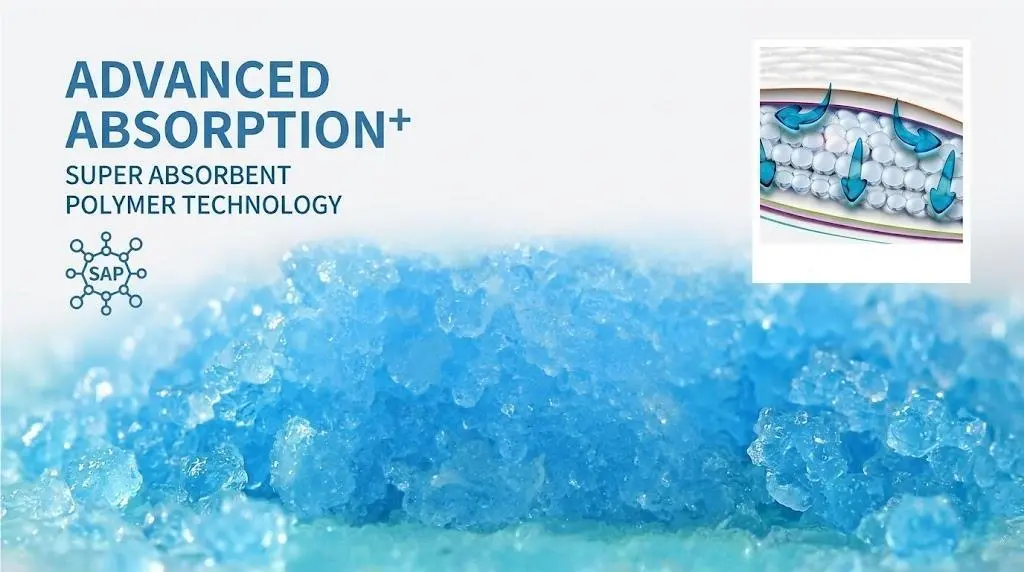
- SAP (Super Absorbent Polymer):
- Function: This is the “magic” ingredient. These micro-granules absorb liquid and physically transform it into a solid, leak-proof gel. It completely locks in the moisture.
- Cost: High.
- Key Advantage: Excellent “retention capacity” (it won’t release liquid under pressure). It is also odor-neutralizing and much more compact than pulp.
The “Weight Trap” in B2B Sourcing
A common tactic for low-cost factories to lower their quotes is to increase the amount of cheap fluff pulp while drastically reducing the expensive SAP content. This creates a pad that “feels” thick, heavy, and quality-built when held, but performs poorly in real-world use.
A 40g pad with high SAP content will consistently outperform a 60g pad with low SAP content. The high-SAP pad will provide several tangible benefits for your customers:
- Instant Absorption & Retention: SAP turns liquid to gel, preventing “puddling” on the surface.
- Superior Odor Control: Ammonia smells are trapped inside the polymer gel, not just masked by a fragrance.
- Prevents Tracking: Dry paws mean no wet footprints throughout the owner’s home.
Why “Thin but Powerful” is the Future of Sourcing
At Honway Pet, we focus on optimized absorption ratios, prioritizing high-quality SAP. Our resulting products are often thinner than low-quality competitors, offering two major advantages for our B2B partners:
- Shipping Cost Efficiency: Thinner pads mean more units per carton and more cartons per container. In an era of high freight costs, this significantly reduces your landed cost per unit, maximizing your profit margins.
- Retail Appeal: Thinner pads allow for more compact packaging (known as “flat packs”), which saves valuable shelf space for retailers and is more convenient for consumers to carry.
A Simple Professional Test for B2B Buyers
If you are evaluating samples from different suppliers, don’t just use a scale. Use the “Pressure Test” to see what you are truly paying for:
- Place competitive samples side-by-side. Pour a fixed amount of colored water (e.g., 50ml) onto the center of each pad simultaneously.
- Wait 30 seconds for initial absorption.
- Place a dry, white paper towel on the same spot on both pads.
- Apply firm, identical pressure to both towels with your hand.
- The Result: The pad that leaves the paper towel driest is the superior product, regardless of which one is heavier. It has the higher SAP content.
Conclusion
When sourcing disposable solutions tailored for your pet brand, look beyond the grams. Weight tells you what a pad is made of (mostly pulp), but performance tells you how much SAP is included. Ask your manufacturer about the exact SAP-to-Pulp ratio. At Honway Pet, we prioritize medical-grade consistency and high-tech polymers to ensure that your customers get the performance they pay for, helping you build long-term brand loyalty.