
Table of Contents
- Introduction: What Happens Behind a Disposable Pet Training Pad?
- Raw Materials Used in Pet Pad Manufacturing
- Step-by-Step Disposable Pet Training Pad Production Process
- How Manufacturers Control Pet Pad Absorption Performance
- Quality Control During Pet Pad Manufacturing
- Packaging and Customization Options for Global Buyers
- What Buyers Should Evaluate When Choosing a Pet Pad Factory
- Conclusion: Choosing the Right Pet Pad Manufacturing Partner
Introduction: What Happens Behind a Disposable Pet Training Pad?
A disposable pet training pad may look like a simple hygiene product, but producing a reliable pad requires precise material selection, advanced production equipment, and strict quality control.
For international buyers, a high-quality pet pad depends on more than appearance. The manufacturing process determines absorption performance, leakage protection, product consistency, and overall customer experience.
A well-designed disposable pet training pad needs to deliver:
- Fast liquid absorption
- Strong leakage protection
- Stable quality between production batches
- Comfortable surface feel
- Reliable supply capacity
Choosing the right disposable pet training pads manufacturer helps brands and distributors reduce supply risks and build long-term product value. Learn more in our complete guide to disposable pet training pads.
Raw Materials Used in Pet Pad Manufacturing
The performance of a disposable pet training pad starts with the materials used inside. Professional manufacturers combine multiple layers of functional materials to create a product that delivers reliable absorption and leakage protection.
1. Non-Woven Top Sheet
The top sheet is the layer that directly contacts pets. Its purpose is to allow urine to pass through quickly while maintaining softness and comfort.
Common materials include:
- PP non-woven fabric
- Hydrophilic treated non-woven fabric
High-quality non-woven fabric improves liquid penetration speed, surface dryness, and overall user experience.
2. Absorbent Core Layer
The absorbent core is the most important performance area of a pet pad. It usually combines Super Absorbent Polymer (SAP) and fluff pulp.
Super Absorbent Polymer (SAP)
SAP absorbs liquid and converts it into gel, helping prevent leakage and improving absorption capacity.
The amount and distribution of SAP directly affect:
- Absorption speed
- Liquid retention
- Product performance
Fluff Pulp
Fluff pulp helps distribute liquid evenly throughout the absorbent core and provides structural support.
3. Waterproof PE Backing Film
The bottom PE film layer prevents liquid from reaching floors.
A reliable PE backing provides:
- Strong waterproof protection
- Good flexibility
- Low noise during use
4. Adhesive and Supporting Materials
Additional materials such as hot melt adhesive and edge sealing components help maintain product structure and stability during transportation and use.
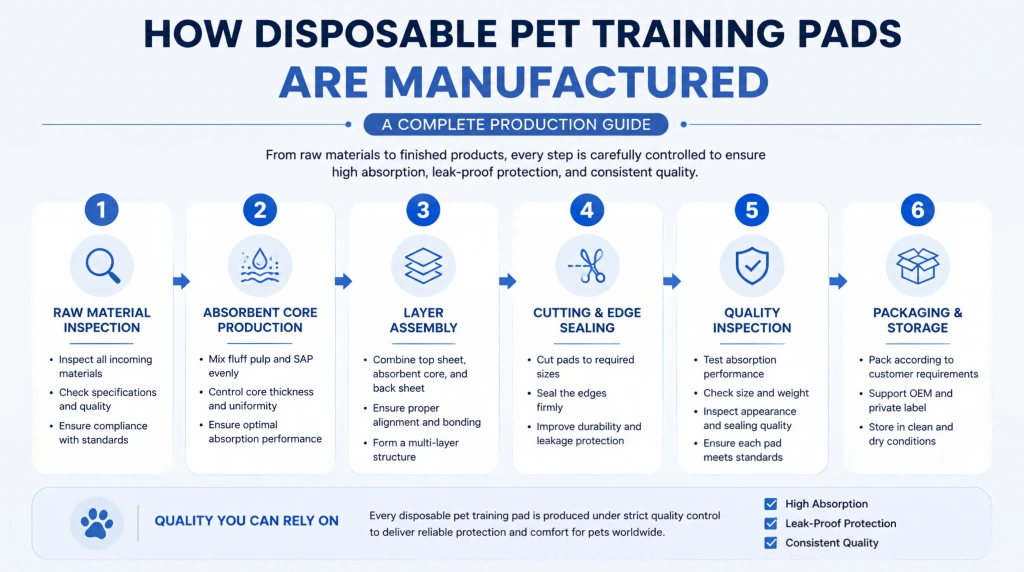
Step-by-Step Disposable Pet Training Pad Production Process
Professional pet pad manufacturing requires precise control throughout the entire production line. Each production stage affects the final product performance, from absorption efficiency to leakage protection.
Step 1: Raw Material Inspection
Before production begins, manufacturers inspect incoming materials to ensure they meet production requirements.
Common inspection items include:
- Material specifications
- Weight consistency
- Appearance quality
- Supplier compliance
Proper raw material inspection helps prevent quality issues before production starts.
Step 2: Absorbent Core Formation
During this stage, fluff pulp and SAP are combined to create the absorbent core layer.
The production equipment controls:
- SAP distribution
- Pulp thickness
- Core uniformity
Uneven material distribution may result in slow absorption, liquid pooling, or leakage problems. Therefore, stable production technology is essential for consistent product quality.
Step 3: Layer Assembly
The main layers of the pet pad are combined through automated production equipment.
The basic structure includes:
Top Non-Woven Layer → Absorbent Core (SAP + Fluff Pulp) → Waterproof PE Backing
Automated assembly ensures accurate alignment and strong bonding between different layers.
Step 4: Cutting and Edge Sealing
Large rolls of finished material are converted into individual pet pads according to customer specifications.
During this process:
- Pads are cut into required sizes
- Edges are sealed
- Product shape is finalized
Proper edge sealing improves product durability and helps reduce leakage risks during use.
Step 5: Quality Inspection
Finished products are inspected before packaging and shipment.
Typical quality checks include:
- Absorption performance
- Size accuracy
- Appearance inspection
- Sealing quality
Step 6: Packaging and Shipment Preparation
After passing inspection, products are packaged according to customer requirements.
Common packaging formats include:
- Retail packaging
- Bulk packaging
- Private label packaging
Flexible packaging solutions allow brands and distributors to create products suitable for different markets.
How Manufacturers Control Pet Pad Absorption Performance
Absorption performance is one of the most important factors buyers consider when selecting disposable pet training pads.
A high-performance pet pad requires careful control of materials, product structure, and manufacturing consistency.
SAP Optimization
The amount and quality of Super Absorbent Polymer directly influence liquid absorption capacity.
Manufacturers adjust SAP levels according to different product requirements, including:
- Target market positioning
- Expected absorption capacity
- Product price range
Core Structure Design
A well-designed absorbent core helps spread liquid evenly throughout the pad.
Poor core design may cause:
- Slow absorption
- Surface wetness
- Uneven liquid distribution
- Higher leakage risk
Production Consistency
For international distributors and pet brands, consistency between shipments is just as important as initial product quality.
A professional pet pad manufacturer should maintain stable:
- Product specifications
- Absorption performance
- Material structure
- Production standards
Quality Control During Pet Pad Manufacturing
For global buyers, quality management is one of the most important factors when evaluating a pet pad supplier.
A reliable manufacturer should control quality throughout the entire production process.
Incoming Material Inspection
Before materials enter production, manufacturers should verify:
- Raw material specifications
- Material quality consistency
- Supplier compliance
Production Process Monitoring
During manufacturing, quality teams monitor key production factors, including:
- Machine operation
- Material distribution
- Product dimensions
- Layer bonding quality
Finished Product Inspection
Before shipment, finished pet pads are checked to ensure they meet customer requirements.
Common testing procedures include:
- Absorption testing
- Leakage testing
- Packaging inspection
- Quantity verification
A complete quality control system helps reduce supply risks and ensures stable product performance for long-term business cooperation.
Packaging and Customization Options for Global Buyers
Different markets have different expectations for pet hygiene products. For brands, retailers, and distributors, customization capability is an important factor when selecting a manufacturing partner.
Professional pet pad manufacturers can support customization in several areas, including product specifications, packaging, and brand positioning.
Product Customization
Depending on market requirements, buyers can customize:
- Product size
- Pad thickness
- Absorption capacity
- SAP content
- Material combination
Different specifications allow brands to develop products for different customer groups, from economy segments to premium pet care markets.
Packaging Customization
Packaging plays an important role in retail presentation and brand recognition.
Common customization options include:
- Custom printed bags
- Retail packaging
- Bulk cartons
- Private label branding
A capable OEM supplier can help brands create customized packaging solutions while maintaining production efficiency.
Product Positioning Options
Pet pads can be developed for different market segments:
Economy Products
Focus on:
- Competitive pricing
- Basic absorption performance
- Large-volume distribution
Standard Products
Focus on:
- Balanced quality and cost
- Reliable daily performance
- Broad market applications
Premium Products
Focus on:
- Higher absorption capacity
- Better materials
- Additional features such as odor control
What Buyers Should Evaluate When Choosing a Pet Pad Factory
Choosing a pet pad manufacturing partner requires more than comparing product prices. A reliable supplier should provide stable quality, manufacturing capability, and long-term cooperation support.
1. Manufacturing Capability
Buyers should evaluate:
- Production equipment
- Factory experience
- Production capacity
- Ability to handle large-volume orders
A supplier with strong manufacturing capability can provide more stable delivery and consistent product quality.
2. Product Development Ability
A professional manufacturer should support product customization and improvement based on market requirements.
This may include:
- New product development
- Specification adjustment
- Material optimization
- Packaging solutions
3. Quality Management System
Quality control is essential for international business cooperation.
Buyers should understand:
- How raw materials are inspected
- How production quality is monitored
- How finished products are tested
4. Supply Reliability
For distributors and retailers, supply stability directly affects business operations.
A dependable pet pad factory should be able to support:
- Regular production schedules
- Seasonal demand changes
- Long-term supply partnerships
Conclusion: Choosing the Right Pet Pad Manufacturing Partner
Disposable pet training pad manufacturing involves much more than combining several layers of materials. Product performance depends on raw material selection, production technology, manufacturing control, and quality inspection.
For pet brands, importers, and distributors, working with an experienced disposable pet training pads manufacturer helps reduce supply risks and create products that meet customer expectations.
A professional supplier should provide:
- Reliable manufacturing capability
- Consistent product quality
- Flexible OEM solutions
- Strong supply chain support
At Honway Pet, we focus on delivering reliable disposable pet hygiene solutions through professional manufacturing processes, OEM capabilities, and quality-focused production management.
Whether you are developing a new private label pet product or looking for a stable wholesale pet pad supplier, choosing the right manufacturing partner is the foundation for long-term success.
Work With Honway Pet
Looking for a reliable disposable pet training pads manufacturer for your brand or distribution business?
Contact Honway Pet to discuss OEM solutions, customized pet pads, and wholesale cooperation opportunities.